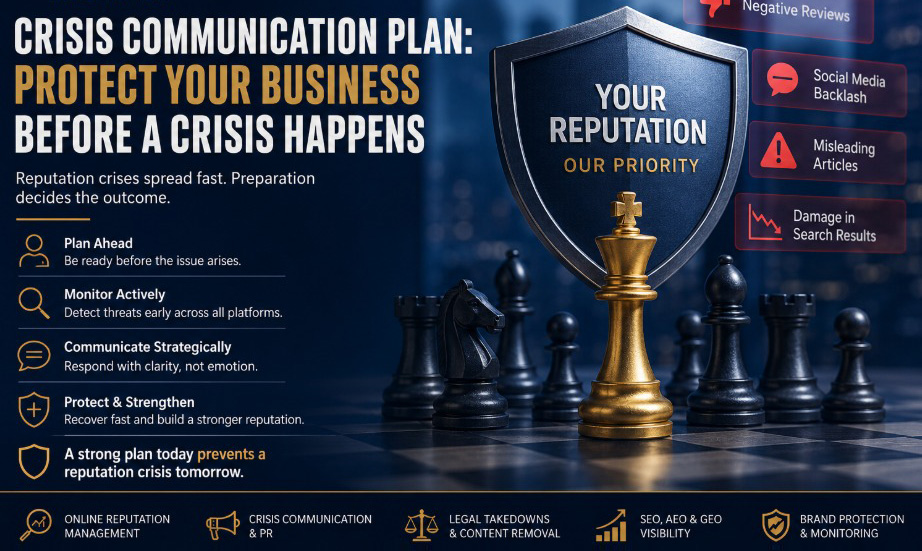
In today's digital world, a reputation can be damaged faster than it can be built.
A single viral post, a coordinated review attack, a misleading news article, or a false accusation appearing on Google can influence how customers, investors, partners, and even AI search engines perceive your business. By the time most organizations realize they have a reputation problem, the damage is already spreading across search results, social media, review platforms, and online communities.
This is why every business—regardless of size—needs a well-defined crisis communication plan.
At Onlyne Reputation, we help businesses prepare for, respond to, and recover from reputation crises using a combination of strategic communications, Online Reputation Management (ORM), digital PR, legal support, search optimization, and AI visibility strategies.
What Is a Crisis Communication Plan?
A crisis communication plan is a structured framework that enables an organization to respond quickly, consistently, and strategically when its reputation comes under threat.
Rather than reacting emotionally, businesses with a crisis communication strategy follow a predefined process that protects trust, reduces misinformation, and helps regain control of the narrative.
Today's crises are no longer limited to product recalls or corporate scandals.
Modern reputation threats often include:
- Coordinated fake review campaigns
- Defamatory online articles
- Negative Reddit discussions
- Viral social media posts
- Brand impersonation
- AI-generated misinformation
- Search engine reputation attacks
- Data leaks or cybersecurity incidents
- Employee misconduct allegations
- Customer complaints gaining widespread attention
Every one of these situations has the potential to impact revenue, customer confidence, investor trust, and future business opportunities.
Why Businesses Cannot Afford to Wait
One of the biggest mistakes organizations make is believing they can create a response after a crisis begins.
Unfortunately, online conversations move much faster than internal decision-making.
Without preparation, businesses often:
- Issue inconsistent public statements
- Allow multiple employees to respond independently
- Respond emotionally on social media
- Ignore legitimate concerns
- Miss critical opportunities to control the narrative
Every hour of delay allows negative content to gain more visibility in Google Search, AI-generated answers, news platforms, review websites, and social media feeds.
A prepared organization responds with clarity.
An unprepared organization reacts with uncertainty.
The Four Pillars of an Effective Crisis Communication Plan
1. Establish a Single Source of Communication
Every organization should appoint one authorized spokesperson responsible for external communications.
Whether this is the CEO, founder, communications head, or an external crisis communications advisor, maintaining one consistent voice prevents conflicting statements and reinforces credibility.
2. Monitor Your Digital Reputation Continuously
You cannot respond to a threat you don't know exists.
Continuous monitoring should extend beyond traditional media and include:
- Google Search
- Google Reviews
- Reddit
- X (formerly Twitter)
- LinkedIn
- Facebook
- Instagram
- News websites
- Forums
- AI search platforms such as ChatGPT, Google AI Overviews, Gemini, and Perplexity
Early detection allows businesses to address issues before they become widespread.
At Onlyne Reputation, our monitoring combines AI-powered sentiment analysis with human expertise to identify emerging reputation risks across multiple platforms.
3. Build a Clear Response Framework
Every crisis is different, but every response should follow a structured process.
An effective framework defines:
- Who approves communications
- Response timelines
- Public versus private communication
- Legal escalation procedures
- Media handling guidelines
- Social media protocols
- Internal employee communication
This ensures every stakeholder receives accurate, consistent information.
4. Strengthen Your Positive Brand Narrative
Crisis communication is not only about limiting negative publicity.
It is equally about increasing the visibility of positive, trustworthy information.
Businesses should continuously invest in:
- High-quality website content
- Thought leadership articles
- Industry insights
- Digital PR
- Customer success stories
- Knowledge Graph optimization
- Search Engine Optimization (SEO)
- Answer Engine Optimization (AEO)
- Generative Engine Optimization (GEO)
Strong digital assets help search engines—and increasingly AI-powered search experiences—understand your business accurately while reducing the prominence of harmful content.
Crisis Communication Strategies for Social Media
Social media can turn a minor issue into a major reputation crisis within hours.
The most common mistakes include responding impulsively or remaining completely silent.
Neither approach is effective.
Instead, businesses should:
- Acknowledge the situation promptly.
- Communicate factual information without speculation.
- Avoid public arguments.
- Move detailed conversations into private channels when appropriate.
- Continue monitoring public sentiment.
- Provide updates only when meaningful progress has been made.
The objective is to demonstrate professionalism while preventing unnecessary escalation.
Reputation Recovery Goes Beyond One Statement
Publishing a response is only the beginning.
Successful recovery requires a coordinated strategy that may include:
- Online Reputation Management (ORM)
- Digital Public Relations (PR)
- Search result improvement
- Content suppression
- Positive content creation
- Review management
- Legal takedown assistance
- Brand entity optimization
- AI search visibility improvements
- Executive reputation management
At Onlyne Reputation, we combine these services into a unified strategy that helps businesses regain trust while improving long-term digital visibility.
Measuring Success
An effective crisis communication strategy should produce measurable improvements over time.
Key performance indicators include:
- Reduction in negative search results
- Improved Google rankings for positive content
- Better online sentiment
- Increased positive media coverage
- Growth in authentic customer reviews
- Improved AI search visibility
- Higher brand trust and engagement
Recovery is a continuous process, and every campaign should be monitored, measured, and refined based on results.
Why Partner with Onlyne Reputation?
Reputation crises rarely affect just one platform.
A negative article can appear in Google Search, spread across Reddit, generate social media discussions, influence review platforms, and even surface in AI-generated search responses.
Our multidisciplinary approach combines:
- Online Reputation Management (ORM)
- Crisis Communication
- Digital PR
- Search Engine Optimization (SEO)
- Answer Engine Optimization (AEO)
- Generative Engine Optimization (GEO)
- Legal and policy-based content removal support
- Review management
- Brand monitoring
- AI reputation intelligence
This integrated strategy enables businesses to respond faster, recover stronger, and build long-term digital resilience.
Frequently Asked Questions
What should a crisis communication plan include?
A comprehensive plan should include a designated spokesperson, continuous monitoring, communication protocols, escalation procedures, stakeholder messaging, and a long-term reputation recovery strategy.
How is crisis communication different from traditional PR?
Public Relations focuses on building a positive brand image over time, while crisis communication manages immediate threats to an organization's reputation. Both disciplines work together to protect trust and restore confidence.
Do small businesses need a crisis communication plan?
Yes. Smaller organizations often have fewer online assets and less authority in search results, making them more vulnerable to reputational damage. A proactive strategy helps minimize risk and accelerate recovery.
How long does reputation recovery take?
Every situation is unique. While some issues stabilize within weeks, more complex reputation challenges involving search engines, news coverage, and multiple online platforms may require several months of sustained effort.
Is hiring a crisis communication firm worth it?
For businesses facing coordinated attacks, damaging online content, or persistent negative search visibility, professional support often results in faster recovery, stronger messaging, and more effective reputation restoration than attempting to manage the situation internally.
Protect Your Reputation Before the Next Crisis
The best time to prepare for a reputation crisis is before one occurs.
A proactive crisis communication plan reduces uncertainty, accelerates response times, protects stakeholder confidence, and safeguards your long-term brand value.
At Onlyne Reputation, we help organizations monitor risks, manage crises, strengthen search visibility, and build resilient digital reputations that stand the test of time.
Your reputation is one of your most valuable business assets. Make protecting it part of your strategy—not your emergency response.